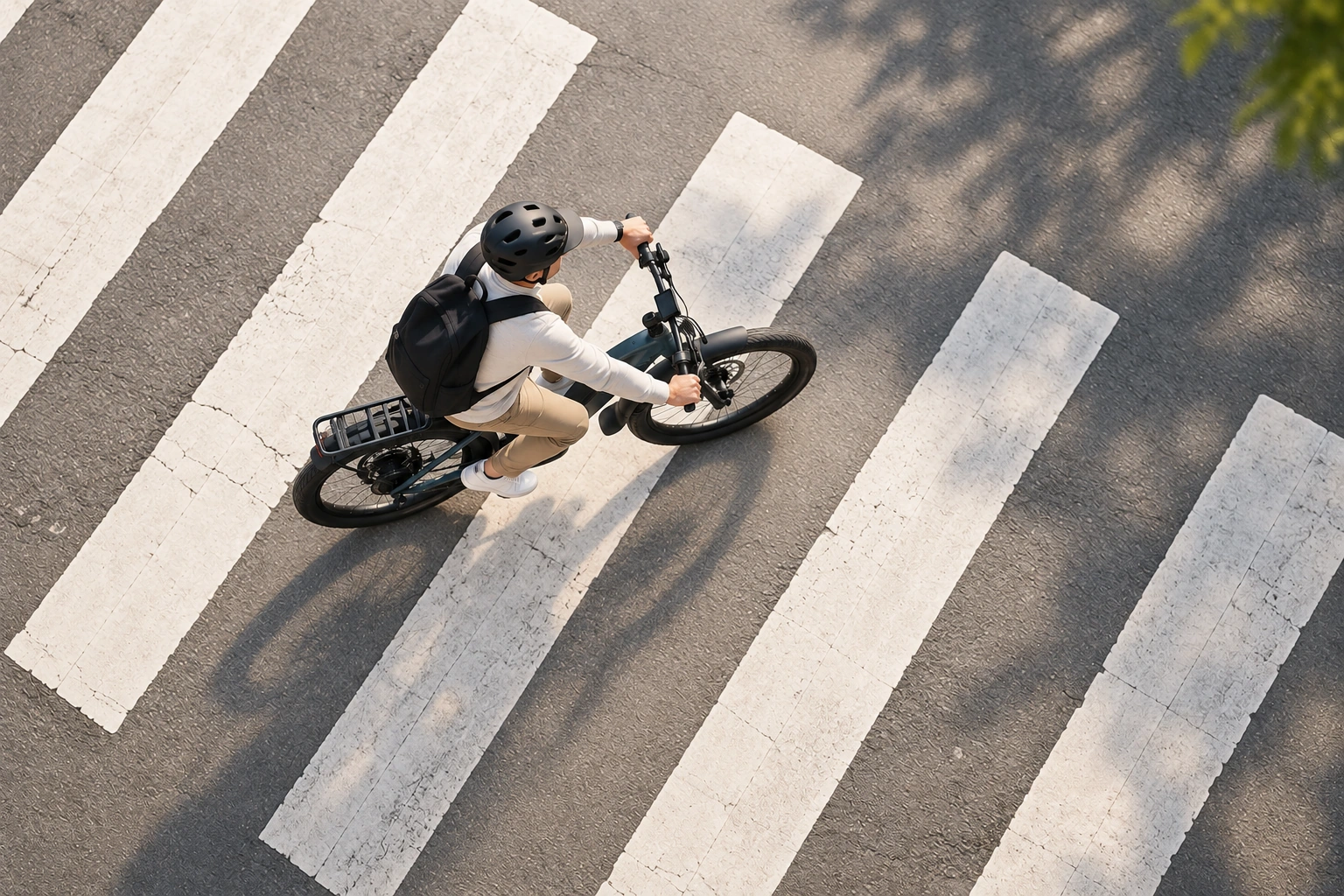
Before You Buy an E-Bike: New Rules, Safety Standards & What Riders Need to Know
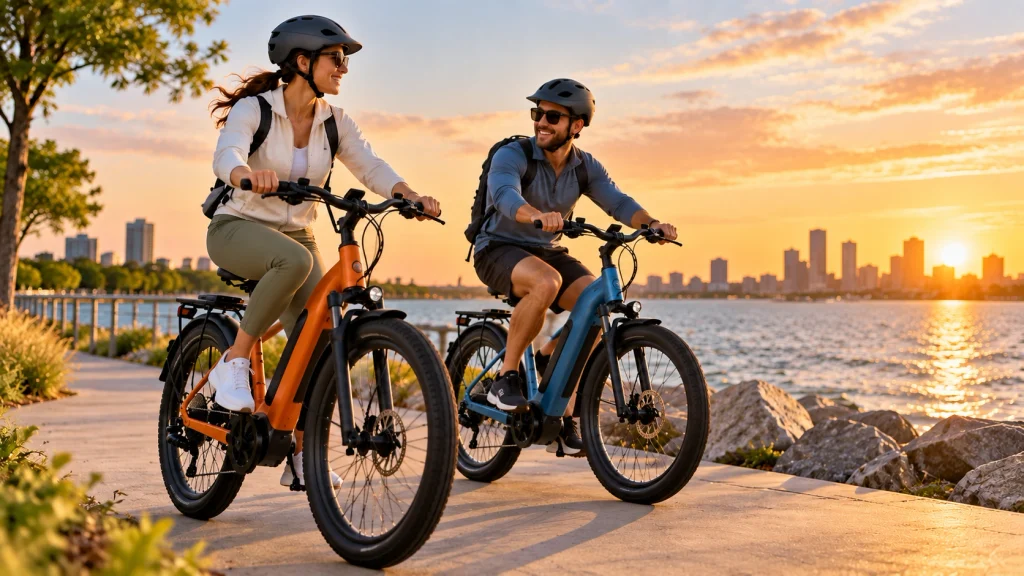
What changing e-bike laws, speed classifications, and battery safety standards mean for riders—and how to choose the right e-bike with confidence.
Electric bikes have quickly gone from a niche alternative to one of the most exciting ways to commute, run errands, explore the outdoors, and replace some everyday car trips.
But as e-bikes become more popular, something else is happening: cities and states across the country are taking a much closer look at how they are built, how fast they can travel, and where they can be ridden.
That doesn’t mean e-bikes are disappearing.
It means buying the right e-bike matters more than ever.
For shoppers, understanding a few basics about e-bike classifications, speed limits, battery safety, and electrical certifications can make it much easier to choose a bike that fits both your lifestyle and the rules where you ride.
At LetsCo, we think that’s a good thing.
Better standards can help create a future where electric transportation is not only convenient and sustainable, but safer and more dependable too.
This article contains affiliate links, which means we may earn a commission from qualifying purchases made through our links at no additional cost to you.
Are E-Bikes Being Banned?
Despite some alarming headlines, e-bikes themselves aren’t suddenly being banned across America.
Instead, regulators are beginning to distinguish more carefully between traditional electric bicycles and faster, more powerful electric vehicles that may fall outside standard e-bike classifications.
That’s an important distinction.
The rapidly expanding electric-mobility market now includes everything from lightweight commuter bicycles to powerful off-road machines. They may look similar, but they aren’t necessarily treated the same under the law.
Understanding Class 1, Class 2 and Class 3 E-Bikes
Many states use a three-class system:
Class 1: Pedal-assist e-bikes where the motor assists while you pedal, generally up to 20 mph.
Class 2: E-bikes that can include throttle assistance and generally provide motor assistance up to 20 mph.
Class 3: Higher-speed pedal-assist e-bikes capable of providing assistance up to 28 mph.
Where each class can be ridden varies by state and municipality. Bike paths, sidewalks, trails, parks, and public roads can all have different rules.
The important takeaway isn’t that e-bikes are going away.
It’s this:
Know what you’re buying—and know the rules where you’re going to ride it.
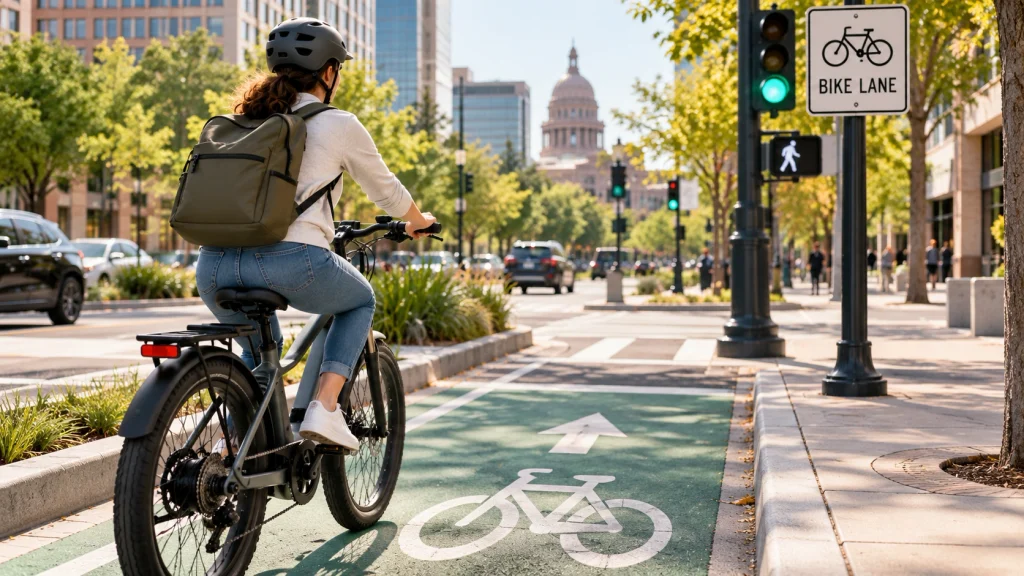
Explore Mooncool E-Bikes & Electric Trikes →
E-Bike Rules Are Changing From New York to Texas
The changing conversation around e-bikes isn’t happening in just one part of the country.
Cities are trying to balance the benefits of electric transportation with concerns surrounding speed, pedestrian safety, battery safety, and increasingly powerful electric vehicles.
New York City, Austin, and Dallas provide three useful examples of how communities are approaching those questions differently.
New York City: A Major Focus on E-Bike Safety
New York City has become one of the most visible examples of tighter oversight surrounding electric bicycles and other powered mobility devices.
With an enormous number of delivery workers, commuters, and residents relying on electric transportation, the city has placed significant attention on both riding regulations and lithium-ion battery safety.
New York City requires powered bicycles sold in the city to meet applicable safety certification requirements, including certification to the UL 2849 standard.
The city has also taken action against businesses selling uncertified electric mobility devices and batteries.
For shoppers everywhere—not just New Yorkers—the developments illustrate why electrical-system certification is becoming something consumers should understand before purchasing an e-bike.
Austin: Where Does an E-Bike End and an E-Moto Begin?
Austin, Texas, provides another timely example.
In 2026, Austin officials addressed concerns surrounding increasingly powerful electric vehicles often described as e-motos—electric dirt bikes, mini bikes, and similar machines that can resemble e-bikes while operating at significantly higher speeds.
Under Texas law, an electric bicycle must have fully operable pedals, an electric motor of fewer than 750 watts, and an assisted top speed no greater than 28 mph.
That distinction matters.
A high-powered electric vehicle may be advertised casually as an “e-bike” while its specifications potentially place it outside the legal definition of an electric bicycle.
Austin’s trail policies provide another reason riders should understand local rules. E-bikes can be permitted on certain urban trails, but riders remain responsible for applicable speed limits, pedestrian right-of-way, and other trail regulations.
The lesson for shoppers is simple:
More power isn’t automatically better.
The best bike is one designed for where and how you intend to ride.
Austin’s 2026 Bike-Share Fire Put Battery Safety Back in the Spotlight
Battery safety also became part of Austin’s e-bike conversation in 2026.
A fire at a CapMetro facility disrupted Austin’s electric bike-share program and damaged equipment associated with the system.
Firefighters reported locating the fire in a battery-charging room containing batteries associated with the bike-share operation.
Investigators were brought in to determine what caused the fire.
That’s an important distinction: the presence of e-bike batteries does not by itself establish that an e-bike battery caused the fire.
Still, the incident demonstrates why battery storage, charging practices, equipment design, and recognized electrical safety standards have become such important parts of the broader e-bike discussion.
Dallas: Speed Limits Show Why Local Rules Matter
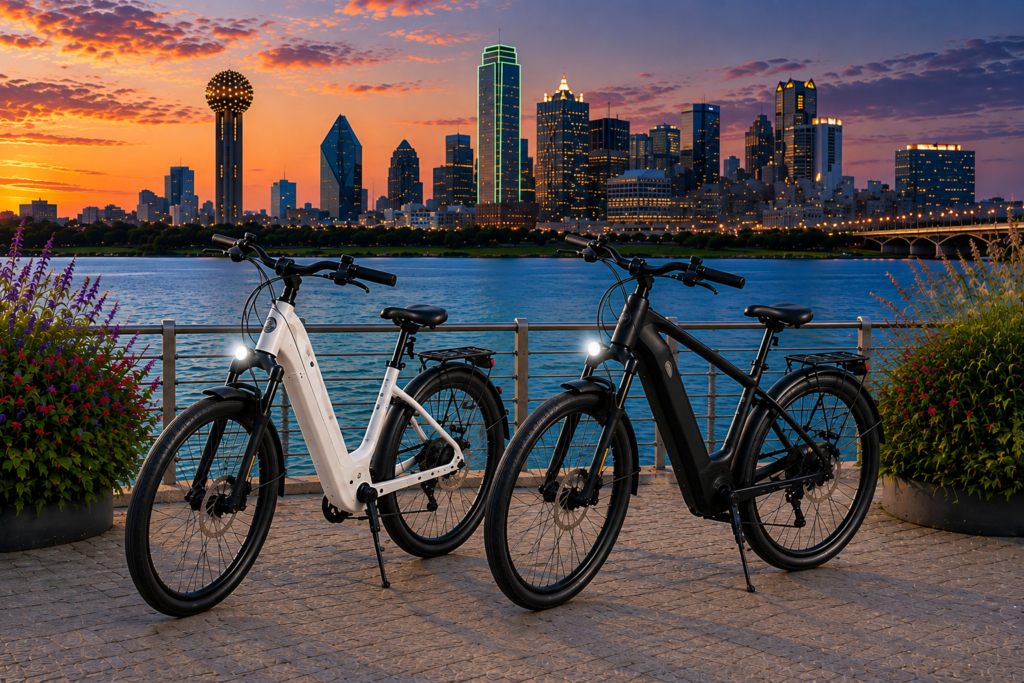
A few hours north, Dallas offers another example of how electric-mobility rules can change from one city to another.
Dallas regulates its shared dockless electric-bike and scooter program, including a 20-mph citywide speed limit for shared devices.
Designated slow-ride areas can reduce speeds further, while certain locations can be designated as no-ride zones.
Dallas also maintains a permitting system for companies operating shared e-bikes and scooters.
For riders, examples from New York, Austin, and Dallas reinforce an important point:
The bike may travel with you—but the rules don’t.
Before purchasing an e-bike, understand its classification and specifications and check the regulations in the communities, streets, parks, and trails where you actually plan to ride.
More Power Isn’t Always Better
It’s tempting to shop for an e-bike the same way we shop for many electronics: bigger numbers must mean a better product.
With an e-bike, that’s not necessarily true.
Motor power, assisted speed, throttle operation, and classification can all affect where an e-bike may legally be ridden.
A powerful off-road model might be exactly what someone wants for private property or an appropriate trail while being unsuitable for a particular city bike path.
Likewise, a lightweight commuter designed around lower-speed pedal assistance may make considerably more sense for someone riding to work every morning.
Instead of asking only:
“How powerful is it?”
Ask:
“Where do I want to ride, and which e-bike is designed for that job?”
E-Bike Battery Safety: What Buyers Should Look For
Speed gets most of the attention, but electrical safety deserves just as much.
Modern e-bikes typically use lithium-ion batteries capable of storing a significant amount of energy in a relatively compact package. That’s exactly what helps make today’s electric bicycles practical.
But batteries, chargers, motors, controllers, and electrical systems need to be properly designed and tested.
That’s where recognized safety standards become important.
What Is UL 2849?
UL 2849 addresses the electrical system of an e-bike, including components such as the battery, charger, motor, and controller.
For consumers comparing e-bikes, certification to a recognized electrical-system standard can be an important consideration.
What Is UL 2271?
UL 2271 addresses batteries used in light electric vehicles.
Battery safety is particularly important because the battery is one of the most expensive and technologically complex components of an electric bicycle.
Certification doesn’t mean riders can ignore proper charging and battery care. But independent testing to recognized standards can provide another level of assurance when comparing electric bikes.
Vanpowers: E-Bikes for Commuting, City Riding and Adventure
Vanpowers is particularly interesting because its lineup isn’t designed around a single type of rider.
There are commuter-oriented models, lightweight urban bikes, and adventure-focused options.
Vanpowers also publishes safety certification information for its electric bikes, allowing consumers to investigate certifications associated with individual models before purchasing.
UrbanGlide: Built for Everyday Transportation
For riders primarily interested in commuting and everyday transportation, the UrbanGlide series combines electric assistance with comfort and practical usability.
Depending on the configuration, riders can find features designed around city transportation, errands, and longer recreational rides.
GrandTeton: When the Pavement Ends
For someone whose idea of an e-bike involves trails and weekend exploration rather than simply the morning commute, the GrandTeton series takes a more adventure-oriented approach.
Its wider tires and trail-focused design make this category worth considering for riders who intend to venture beyond traditional city streets.
City Vanture: Lightweight Urban Mobility
For riders prioritizing lightweight construction and minimalist urban design, the City Vanture takes another approach.
Its streamlined design makes it particularly interesting for city riders, apartment residents, and commuters who value simplicity and lower-maintenance transportation.
The point isn’t that one configuration is universally better.
It’s that the best e-bike depends on where and how you’re actually going to ride it.
-
Sale!
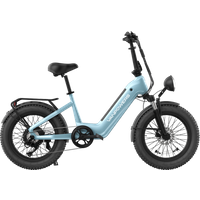
Cycanon
Original price was: $1,499.00.$999.00Current price is: $999.00.Cycanon is a compact fat tire e-bike designed for everyday adventures.
View Deal -
Sale!

GrandTeton-Pro
Original price was: $2,199.00.$1,599.00Current price is: $1,599.00.Take on the unknown with the GrandTeton-Pro All-terrain Electric Assist…
View Deal -
Sale!
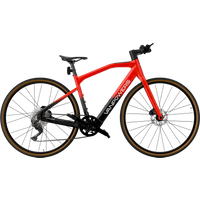
UrbanCross-Pro
Original price was: $2,399.00.$1,599.00Current price is: $1,599.00.Introducing the UrbanCross - Pro Electric Assist Bicycle.
View Deal -
Sale!
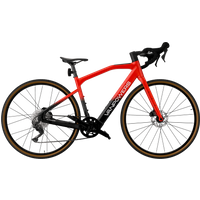
UrbanCross-Ultra
Original price was: $2,999.00.$1,999.00Current price is: $1,999.00.Introducing the UrbanCross - Ultra Electric Assist Bicycle.
View Deal
Mooncool: E-Bikes and Electric Trikes for Everyday Mobility
Not every rider wants—or needs—a traditional two-wheel e-bike.
That’s where Mooncool brings something different to the conversation.
Mooncool offers electric bikes as well as electric trikes designed around stability, accessibility, carrying capacity, and everyday transportation.
Electric Trikes Offer Another Option
Three-wheel electric models can be particularly interesting for riders who prioritize stability or want additional cargo capacity for errands and everyday trips.
Mooncool’s electric trikes provide a very different riding experience from an adventure-oriented mountain e-bike.
And that’s exactly why they’re worth considering.
The rapidly expanding e-bike market isn’t simply producing faster bicycles. It’s creating different forms of electric transportation for people with very different needs.
Folding E-Bikes for Smaller Spaces
Mooncool also offers folding electric-bike options, providing another alternative for riders who may need easier storage or transportation.
For apartment residents, RV travelers, commuters, or anyone working with limited storage space, a folding design can be an important consideration.
-
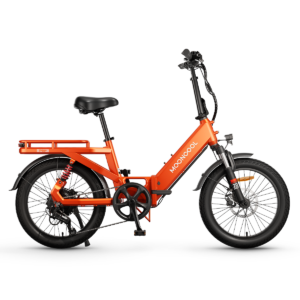
POP Folding Electric Bike – Vibrant Orange-Gloss
$1,199.99POP Folding Electric Bike
View Deal -
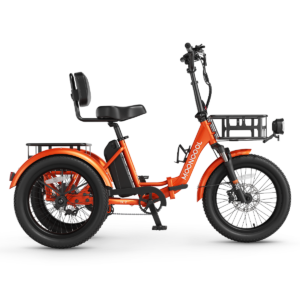
TK2 Folding Electric Trike – Vibrant Orange-Gloss
$1,499.99The TK2 Electric Trike perfectly combines value and practicality.
View Deal -
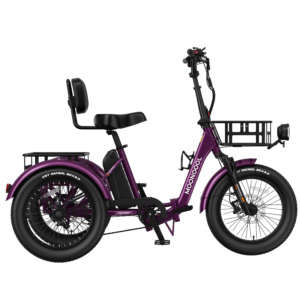
TK2 PRO Electric Trike – Deep Magenta
$1,999.99The TK2 Electric Trike perfectly combines value and practicality.
View Deal -
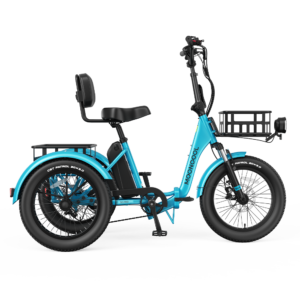
TK Pro Electric Trike – Lake Blue
$1,699.99The TK Pro Electric Trike perfectly blends powerful performance with…
View Deal
Explore Mooncool E-Bikes & Electric Trikes →
5 Things to Check Before Buying an E-Bike
A little research before purchasing can prevent a lot of frustration later.
1. Check the E-Bike Classification
Determine whether the bike is Class 1, Class 2, or Class 3—or whether its specifications potentially place it outside standard e-bike classifications in your jurisdiction.
2. Check the Assisted Top Speed
Don’t assume that because an e-bike is available for purchase online it can legally be ridden everywhere.
Check the manufacturer’s specifications and compare them with the regulations where you intend to ride.
3. Look for Recognized Electrical Safety Certification
Investigate the electrical-system and battery certifications associated with the specific model you’re considering.
Standards such as UL 2849 and UL 2271 are increasingly important terms for e-bike shoppers to recognize.
4. Check State and Local E-Bike Laws
State laws are only part of the picture.
Cities, parks, trails, college campuses, and other jurisdictions may have additional rules governing where particular types of e-bikes can operate.
If you’re purchasing an e-bike specifically for commuting or riding a favorite trail system, check those rules before purchasing.
5. Think About How You’ll Actually Use It
A commuter, trail rider, recreational cyclist, and someone hauling groceries have very different needs.
Choose the bike around the journey—not simply the biggest motor or highest advertised speed.
E-Bike Battery Safety Doesn’t End at Checkout
Choosing an appropriately tested product is an important first step, but what happens after you bring your e-bike home matters too.
Use the Correct Charger
Use the charger supplied or recommended by the manufacturer.
Avoid mixing batteries, chargers, or electrical components that weren’t designed to work together.
Pay Attention to the Battery
Don’t charge a battery that appears damaged, swollen, unusually hot, or otherwise abnormal.
Follow the manufacturer’s instructions regarding charging, storage, temperature, and maintenance.
Think About Where You Charge
Keep charging areas away from exits and combustible materials and follow manufacturer guidance about whether a battery can safely be charged unattended or overnight.
Dispose of Batteries Properly
When an e-bike battery eventually reaches the end of its useful life, don’t simply place it in ordinary household trash.
Look for an appropriate lithium-ion battery recycling or disposal program in your community.
Responsible electric transportation includes taking care of the technology that makes it possible.
Why Better E-Bike Rules Could Be Good for Riders
It’s easy to see new regulations and assume they’re bad news for electric bikes.
There is another way to look at it.
Clearer classifications, stronger electrical safety standards, and better-informed consumers can help distinguish thoughtfully engineered e-bikes from electric vehicles that may not belong on the same roads, trails, and bike paths.
That’s ultimately good for riders.
It’s also good for communities trying to make room for new forms of transportation.
Electric bikes have the potential to replace many short vehicle trips, make commuting more accessible, reduce reliance on cars for some everyday journeys, and give people another reason to get outside.
The goal shouldn’t be fewer e-bikes.
It should be better e-bikes, safer batteries, and smarter riding.
Ride Smarter. Choose Better.
The e-bike market is evolving quickly, and regulations will continue evolving with it.
That makes one principle increasingly important:
Don’t buy an e-bike based solely on speed, power, or price.
Look at how it’s engineered. Investigate its safety certifications. Understand its classification. Think about where you’re actually going to ride it.
Brands such as Vanpowers offer options spanning city commuting to outdoor adventure, while Mooncool expands the possibilities with electric bikes and trikes designed for different types of everyday mobility.
Different riders need different solutions.
The right e-bike isn’t necessarily the fastest one.
It’s the one that safely gets you where you want to go.
Explore E-Bikes Through LetsCo.io
Whether you’re looking for an everyday commuter, an adventure-ready e-bike, a folding model, or the added stability and carrying capacity of an electric trike, start by choosing the type of ride that fits your life.
At LetsCo, we believe better everyday choices can create a bigger collective impact. Choosing cleaner transportation is one more way the products we use can help move us toward healthier communities and a more sustainable future.
We’ve committed to donating 10% of the revenue LetsCo earns to organizations working toward cleaner rivers, healthier oceans, conservation, and stronger communities.
That means the products you’re already shopping for—from everyday family essentials to things for your home, work, and adventures—can become part of something bigger.
Same shopping. Greater impact.
Related Environmental Articles:
- The Rise of Purpose-Driven Shopping: Why Where You Buy Matters More Than Ever
- How Sustainable Commerce Can Help Solve Microplastic Pollution Through Ocean and River Restoration
- How to Reduce Microplastic Pollution in Oceans and Rivers (Complete 2026 Guide)
- How River Restoration Programs Drive Real Change
Affiliate Spotlight Articles:
- Where Fashion Meets Individuality: Discover CicyBell’s Modern Women’s Collection
- 5 Best Amazon Kitchen Gadgets That Save Time In 2026
- Built for the Journey : Discover Vanpowers E-Bikes
- Paris Hotel Guide: Beautiful Hotels for Every Travel Style
- Where Fashion Meets Individuality: Discover CicyBell’s Modern Women’s Collection
- Discover more Outdoor: Fishing , Hunting and Camping with King’s Camo
- Ditch the Car, Grab a Trike, & Roll with 3x the Fun: Mooncool
Editor’s note: E-bike laws, classifications, speed restrictions, and local regulations vary by jurisdiction and can change. Always check current state and local regulations for the places where you plan to ride. Product specifications and certifications should also be verified for the specific model before purchasing.